Master graph
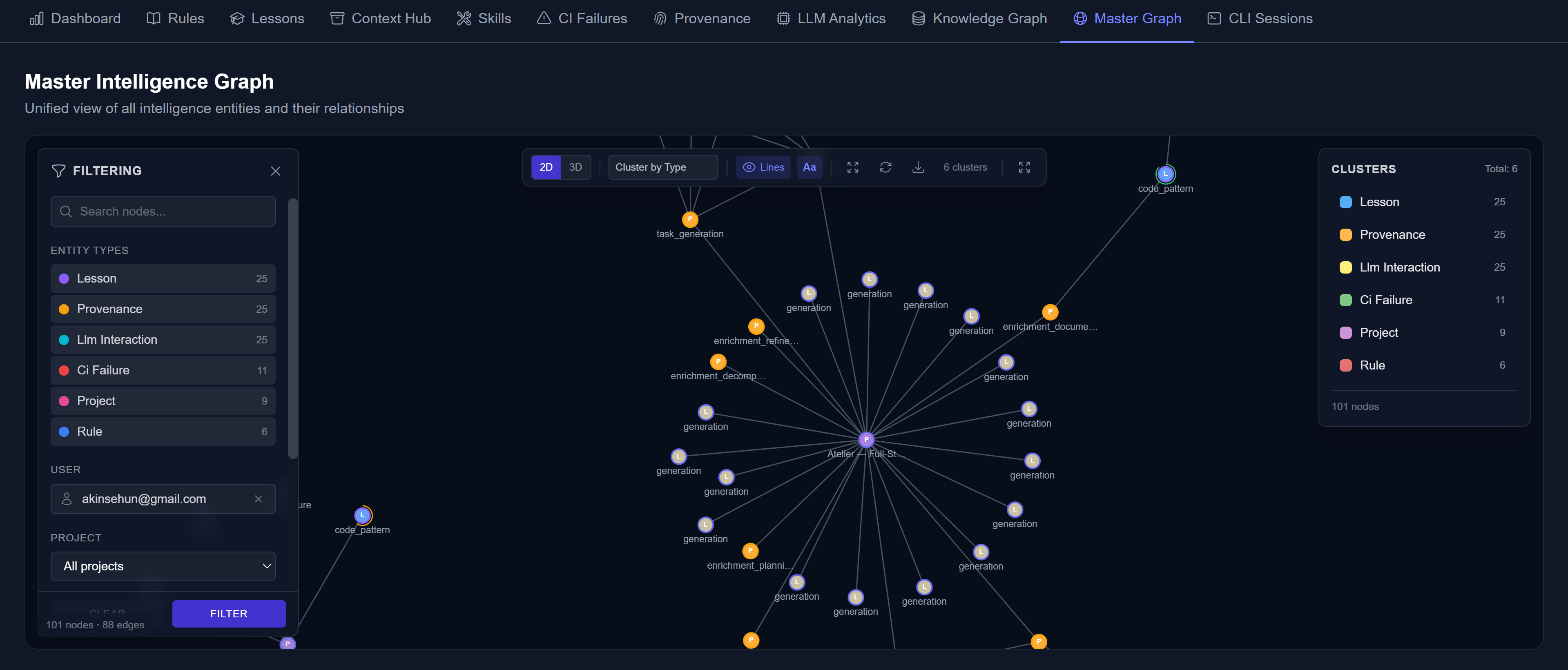
See services, packages, and critical paths as one map. Follow how a change fans out before you edit.
- Whole-repo structure, not a prompt sample
- Edges you can follow before you edit
Codebase intelligence
Full-repo graph so answers cite real files.
The category
Coding assistants sample through a context window. Arvad parses your repo with tree-sitter, keeps the map fresh with git, and cites the files used on every run.
Tree-sitter parses the whole repo: modules, edges, and seams.
Answers and refactors cite real file paths you can open.
The graph refreshes with git so generate, review, and deploy share one map.
Intelligence Hub surfaces churn and hotspots before production does.
The graph
Assistants that only see a prompt window guess. Arvad builds a living map first, so every answer and refactor points at real files.
Map the repo once. Every run after that starts from that map.
See services, packages, and critical paths as one map. Follow how a change fans out before you edit.
Health, churn, and hotspots stay visible so the team knows where attention is owed — before a customer finds the seam for you.

When you need a sharper metaphor than a screenshot, the constellation still reads as modules and edges — the same structure that powers cited answers on the run.
Why assistants fail
Token windows, open buffers, and tribal onboarding fail the same way on every large repo.
200K
Sampling hides the seam that breaks production.
Cross-file
Refactors need the dependency map.
Day 1
New engineers re-learn the architecture from chat.
Connect the repo, build the full graph, then ask with cited files before you merge blind.
Connect the repo, build the full graph, then ask with cited files before you merge blind.
OAuth into GitHub, GitLab, or Bitbucket. Tree-sitter parses the languages you already ship.
Grammar coverage for languages you ship
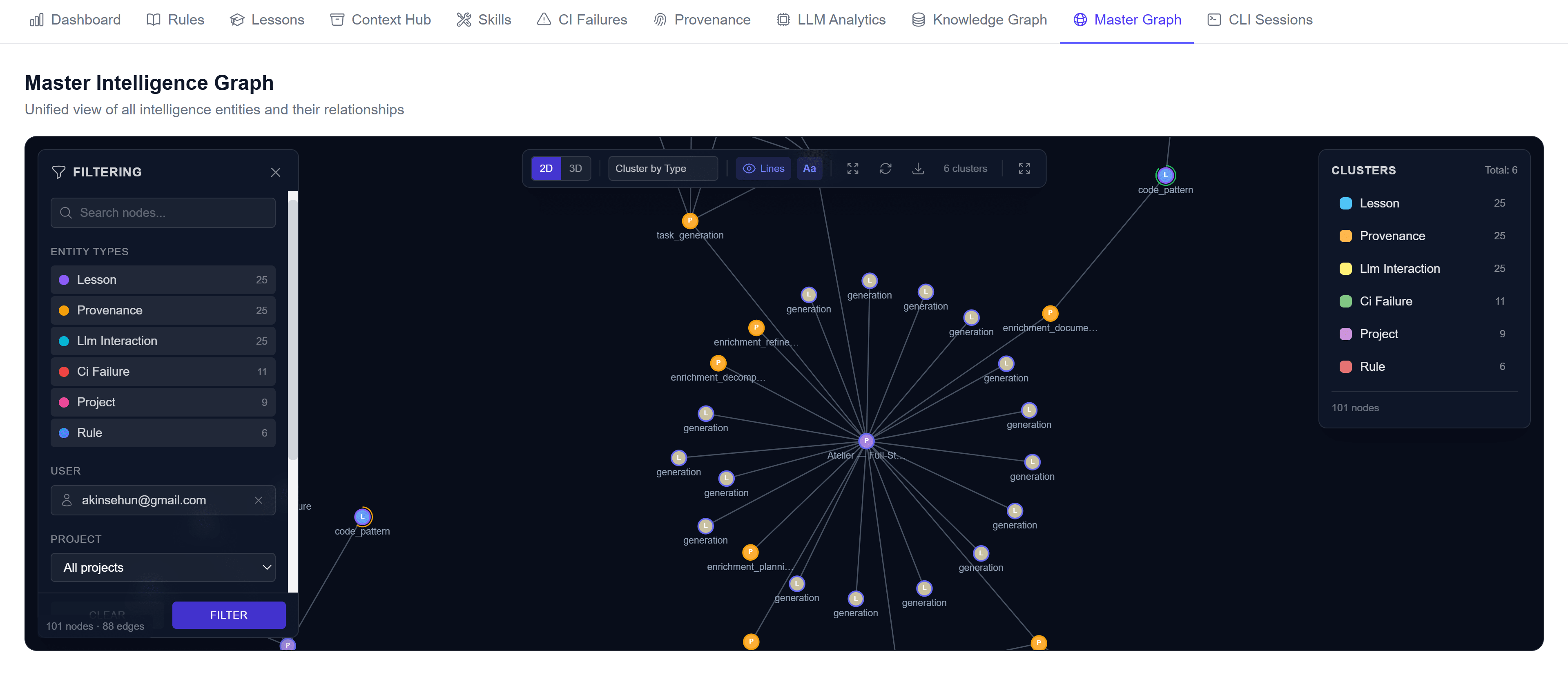
Modules, edges, and seams become a navigable map in Intelligence Hub, including services and packages.
The map is the repo, not a prompt sample
Graph-backed evidence
3 services · 11 files · 0 shared schemas
Checks green. Staging URL live. Spend recorded on the same thread.
Ask across the graph. Answers reference real paths, listed on the evidence panel — not a vibes summary.
Cited files listed on the evidence panel
< 30 min
Time to first thin PR on a connected repo
Measured on connected repos with a small first change.
40+
Languages parsed via tree-sitter
Grammar coverage for languages you ship.
100%
Full repo in the graph
The map is the repo, not a prompt sample.
Ask architecture questions, run cross-cutting refactors, and onboard engineers with cited files from day one.

Ask how auth works. Get the actual file map. Answers cite real paths from the graph.
Stays in the workspace with plan and checks
Rename an API with blast radius visible first.
Blast radius listed before the PR opens
Extract billing? Idempotent payments? File-backed answers.
Cited files required on architecture answers
Arvad sits where the thread keeps the plan, staging, spend, and checks.
| Capability | Coding assistant | Arvad |
|---|---|---|
| Repo coverage | Sampled window | Full graph |
| Cited files | Maybe | On the run evidence |
| Blast radius | Guessed | Shown on the change |
| Stays fresh with git | Re-explain daily | Graph updates with git |
Limits stated plainly. No demo theater.
One question
If you cannot, you still have a chat log. Arvad keeps that work in one workspace.
Keep exploring
Connect one repo. Ask a real question. Keep the citations.